01 / LOAD
145 → ~82 kgBodyweight
Less weight to carry up every climb and less repeated load through the legs. A change of about 63 kg since December 2022.
BEYOND BASECAMP / EVIDENCE
The question was never whether I felt ready. It was whether the evidence said I was getting closer.
01 / LOAD
145 → ~82 kgLess weight to carry up every climb and less repeated load through the legs. A change of about 63 kg since December 2022.
02 / ENGINE
~26 → ~46A useful trend in aerobic capacity, measured by wearables over time. It is an estimate, not a lab test or an altitude forecast.
03 / CLIMB
~120 → ~70 minA repeatable local climb. Weather, route and conditions vary, so the pattern across attempts matters more than a single stopwatch result.
04 / DURATION
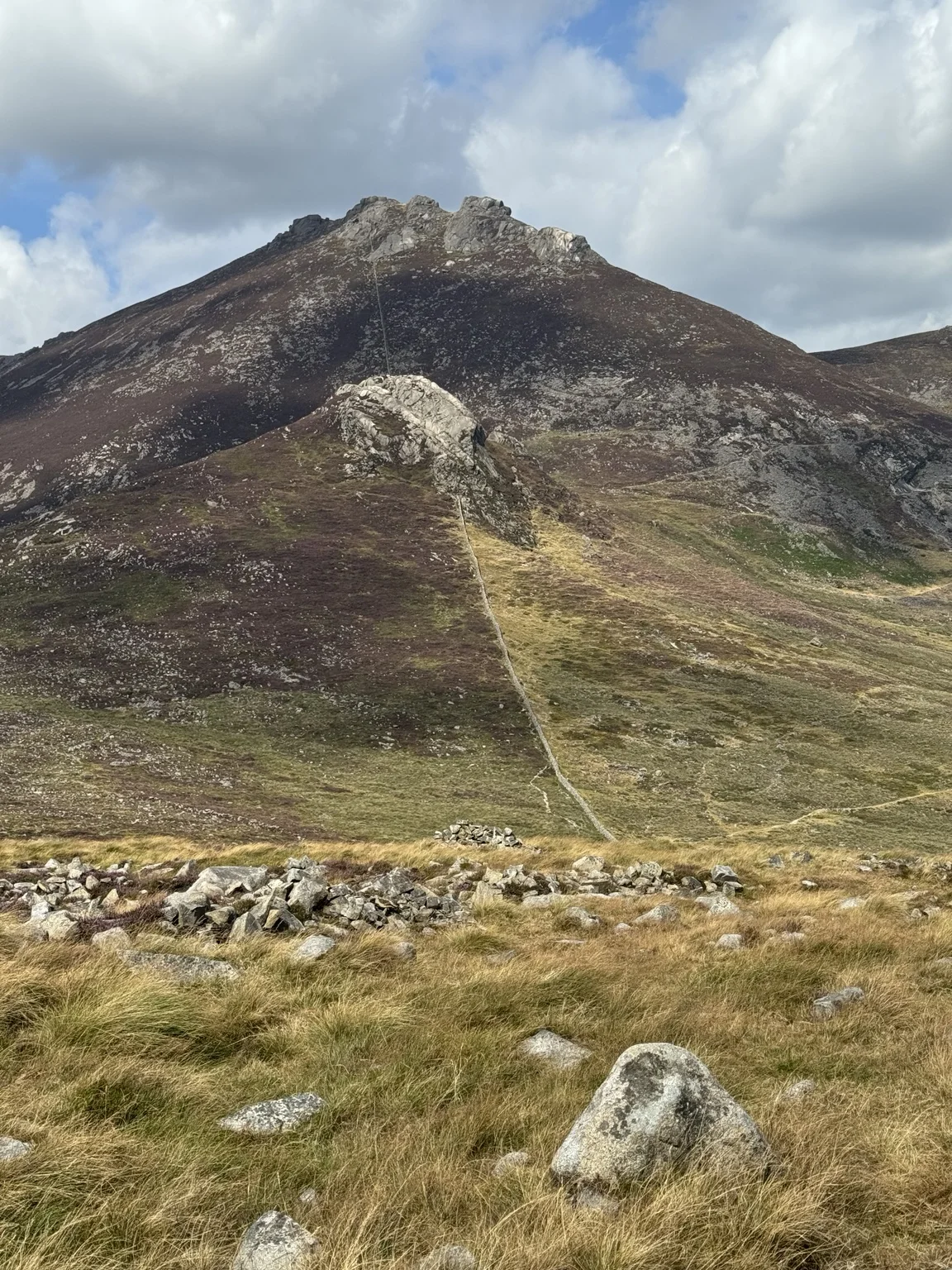
Seven SevensThe pre-dawn start tested kit and judgement. By the last descent off Meelmore, my quads and feet were sore. A useful limit to notice before Nepal.
We will spend nights above 4,000 metres and cross three passes over 5,000 metres. None of these measures guarantees acclimatisation. Nor does a strong day in the Mournes prove that I can recover for another high day.
That is why I track sleep, resting heart rate and HRV alongside how I move and feel. They help adjust the work, but they are context, not a scorecard for the mountain.
Read the training method →