THE FIRST BEYOND BASECAMP PROJECT
Everest Three Passes Trek
Five of us will leave Lukla on 25 October 2026. The plan is to cross Renjo La, Cho La and Kongma La, visit Everest Base Camp, and find out what our preparation is worth.
THE ROUTE IN BRIEF
Three ways across.
The Everest Three Passes Trek is a circuit through the Khumbu in Nepal. The passes link neighbouring valleys on foot: Renjo La at about 5,340 m on our itinerary, Cho La at about 5,420 m and Kongma La at about 5,535 m. We will walk via Gokyo and Everest Base Camp, with climbs to Gokyo Ri and Kala Patthar.
These are high crossings, not summits. On a clear day the reward is a different view into each valley. On a poor day, the guide’s decision matters more than the view.
See our clockwise Three Passes route →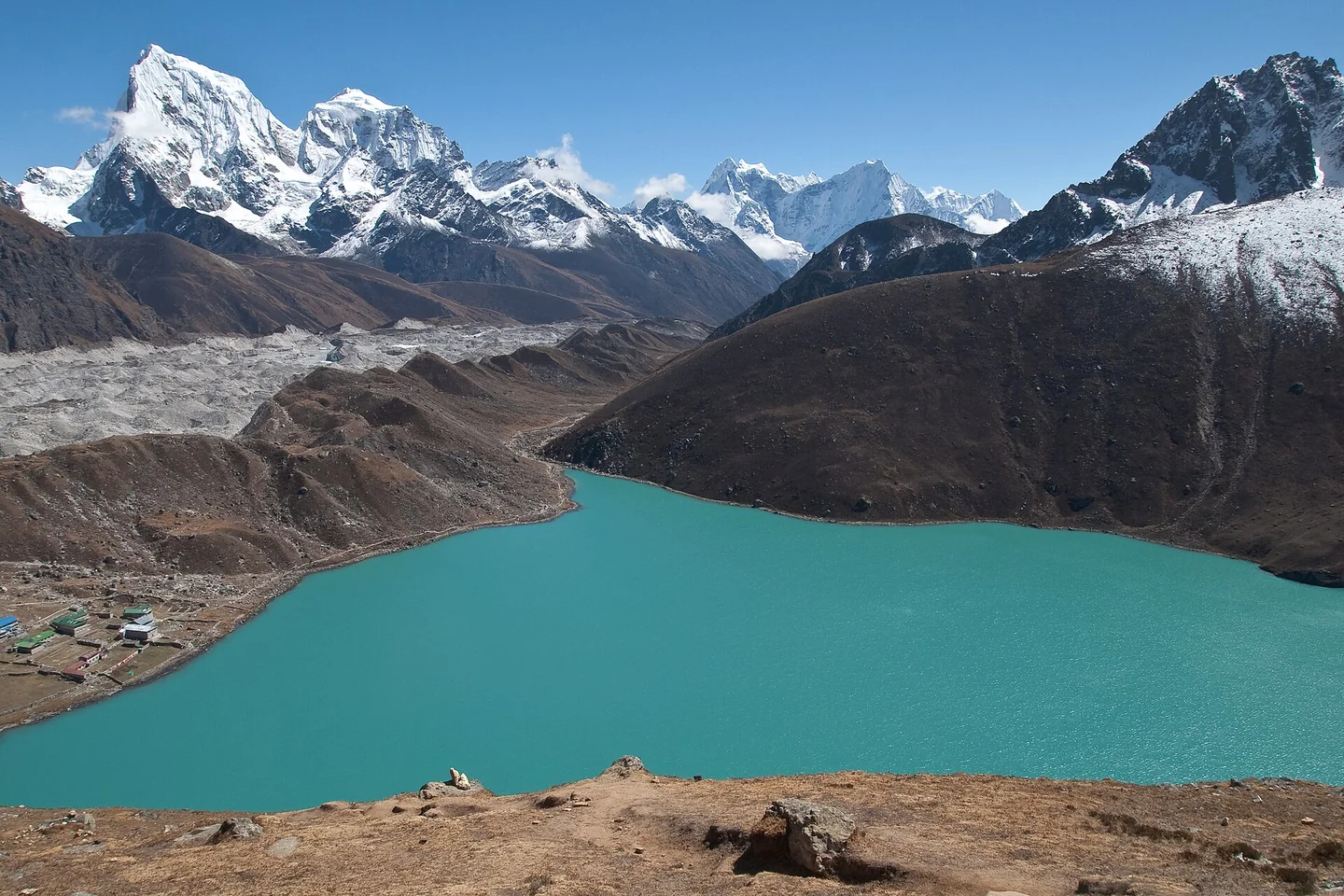
WHY THE LONG WAY
Base Camp is one stop.
We could have followed the main Everest Base Camp trail there and back. The Three Passes brings us into the western valley through Thame, across to the Gokyo lakes, then over Cho La to the Khumbu. After Base Camp and Kala Patthar, Kongma La takes us into the Imja Valley.
It is a longer, more varied way to see the region. That appealed to all five of us for different reasons. The extra days and crossings also leave much less room for bravado.
Clockwise, in our case.
We head west from Namche towards Thame, cross Renjo La first and finish with Kongma La. The opposite direction starts up the main Everest valley and meets the passes in reverse order. Either can work with suitable acclimatisation and conditions; direction alone does not settle difficulty or safety.
Open the 16-day itinerary →THE REAL WORK
What makes it difficult?
A hard day would be manageable. The challenge is having another one tomorrow.
There are consecutive trekking days, nights above 4,000 metres, three passes above 5,000 metres and steep descents after long climbs. Cold, changing weather and uneven ground add to the workload. The effects of altitude cannot be inferred from fitness at home.
Recovery becomes part of the route. We have an acclimatisation day at Namche, a gradual approach through Thame and Lunden, and a guide who can change the plan. Even with those choices, cumulative fatigue and symptoms at altitude need attention.
PREPARATION
How fit is fit enough?
There is no single number. I started at roughly 145 kg, decades after representing Ireland in athletics. The useful question was whether I could build the aerobic capacity, climbing legs and recovery to repeat long days.
My training has combined Zone 2 work, VO₂ intervals, strength, vertical ascent in the Mournes and long days on my feet. Weight management reduced the load I carry up every climb. Sleep, resting heart rate and HRV helped me decide when to push and when to move a session.
This is a record of my preparation, not a prescription for another trekker. A strong VO₂ estimate does not predict how someone will acclimatise.
Read how I trained for the Three Passes →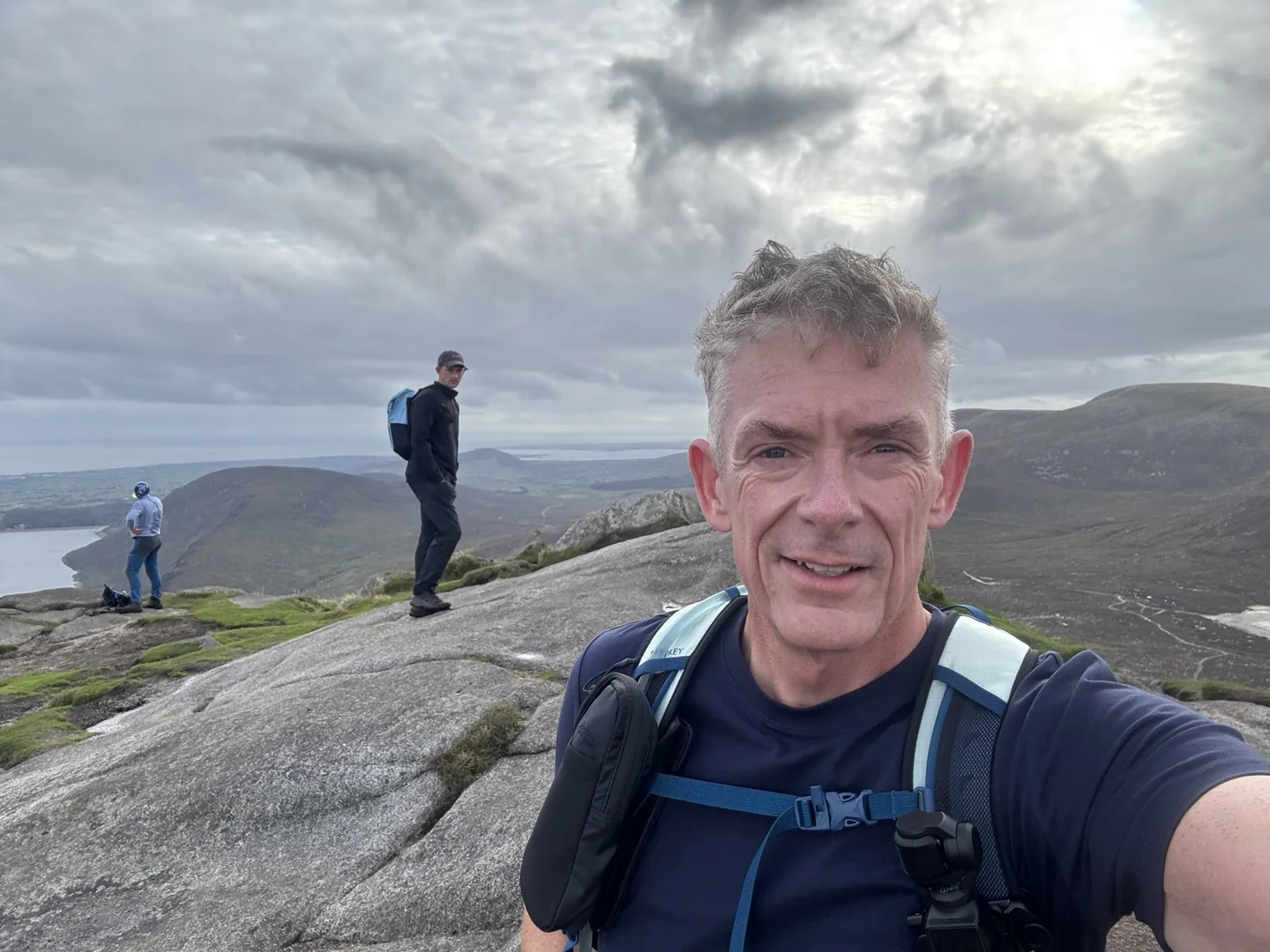
23 OCTOBER–7 NOVEMBER 2026
The expedition.
Graham, Aidan, Niall, Stephen and Luke. Kathmandu to Lukla, then Phakding, Namche, Thame, Lunden, Renjo La, Gokyo, Cho La, Everest Base Camp, Kala Patthar, Kongma La and Chhukung. A helicopter return is planned for 5 November, subject to the weather.
SHORT ANSWERS
Questions we had, too.
How high are the Everest Three Passes?
Our itinerary puts Renjo La at 5,340 m, Cho La at 5,420 m and Kongma La at 5,535 m. Published figures vary a little by source and measurement.
How difficult is the Everest Three Passes Trek?
It combines long days, altitude, steep ground and cumulative fatigue. Conditions can change the difficulty on any given pass. Our route shows where those days fall.
How long does the Three Passes Trek take?
Our plan is 16 days in Nepal, with 11 walking days from Lukla to Chhukung and a weather contingency day in Kathmandu. Other itineraries vary.
Is it harder than a standard Everest Base Camp trek?
Usually it demands more: additional high passes, varied terrain and more sustained effort. Our Base Camp visit sits within the wider circuit.
Do you need mountaineering experience?
It is a trek rather than a technical climb, but high passes may involve snow or ice and need sound judgement. Our guide will assess conditions and the route.
How fit do you need to be?
Fit enough to walk and climb for consecutive days and recover between them. Training cannot guarantee altitude tolerance. This is how I prepared.
Clockwise or anticlockwise?
We are going clockwise via Thame and Renjo La first. In reverse, the main Everest valley comes first. Acclimatisation, weather and the chosen stages matter more than a universal rule.
How do you train for the Three Passes?
We have built time on feet, climbing, aerobic work and strength, then tested recovery after long days. See the training method.
Can you train for high altitude?
You can improve fitness for the work and plan a sensible ascent. Fitness does not guarantee acclimatisation. Our itinerary builds in time around Namche before the higher nights.
What is the highest point?
Kala Patthar, at 5,545 m in our itinerary, is our highest planned point. Kongma La at 5,535 m is the highest of the three passes.