THE PREPARATION
How I Trained for the Everest Three Passes Trek at 53
What would need to be true for this challenge to become possible?
A different starting line.
I represented Ireland in international athletics and ran the 400 metres in under 50 seconds. Decades later I was around 145 kg. Crossing three Himalayan passes was not realistic from there.
The work was to change the inputs: what I weighed, how long I could move, how I climbed, how I recovered, and whether those improvements survived an ordinary working week. I wanted to go with my sons. That was enough reason to start.
Read the longer personal journey →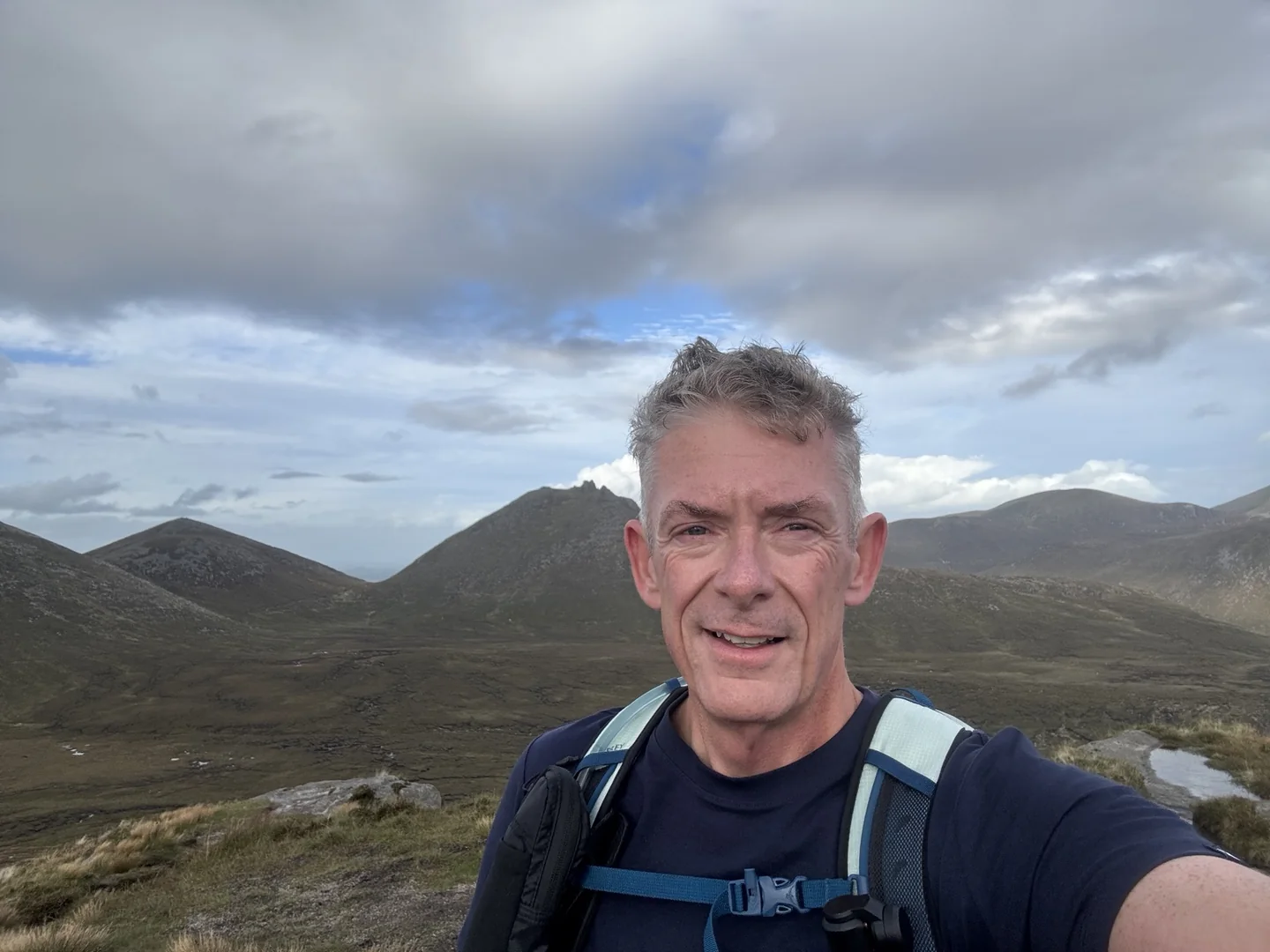
THE EVIDENCE
Three measures I kept returning to.
The VO₂ numbers are wearable estimates, not laboratory results. Donard times vary with route and conditions; these are personal benchmarks rather than controlled tests.
Explore the Everest Readiness measures →Build the engine. Then use it on hills.
Aerobic capacity
My estimated VO₂ max rose from roughly 26 to 46. A higher aerobic ceiling helps on sustained climbs, but the number alone cannot tell me how a day at 5,000 metres will feel. I kept easier Zone 2 work in the week so I could accumulate volume without turning every session into a test.
VO₂ intervals
I retained hard intervals to keep developing that ceiling. They work only if I can recover from them. After a demanding mountain weekend, moving the session can be the better decision.
Bodyweight
Moving from 145 kg into the low 80s changed the load on each ascent, the relative effort of walking and the strain on my joints. It also made heat and long days easier to manage. The aim was useful capacity, not a particular appearance.
Mountain fitness
Slieve Donard gave me a familiar ascent to revisit. Around two hours became roughly seventy minutes. The Seven Sevens gave a different test: a pre-dawn start, water treated from a stream, and sore quads and feet on the final descent off Meelmore. That information matters as much as the summit time.
Strength
Legs for climbing, posterior chain for descents and carrying a pack, trunk for stability, and upper body for a body that still works after a long day. Strength work also gives me a better chance of staying robust while training volume rises.
Long days and back-to-back fatigue
A short fast climb is not the trek. Long Mourne days build time on feet. Consecutive days reveal whether the legs, feet and recovery can tolerate the cumulative load.
THE ADJUSTMENT LOOP
Data changes the next decision.
I look at sleep, resting heart rate, HRV, fatigue, training volume and performance on known climbs. One poor reading is rarely a verdict. A pattern across several signals is more useful.
Collect information. Identify a signal. Adjust training. Test again. AI helps me examine trends and challenge my assumptions, including the temptation to do the hard session simply because it was written down. It does not decide whether I am acclimatising in Nepal.
On a tired week, that may mean replacing intervals with an easier walk and returning to the session later. The decision is less dramatic than the chart.
Recovery is training.
Sleep and the next day’s ability to move well matter. HRV and resting heart rate add context, but I do not let a single wearable score overrule how I feel or the mountain conditions.
Read updates →What fitness cannot promise.
There is no high altitude in County Down. My training can make the walking more manageable, not guarantee how I respond to thinner air. The gradual route, our guide’s judgement and a willingness to change plans remain essential.
See the acclimatisation stages on our route →